
History Center
of San Luis Obispo County
& Dallidet Adobe & Gardens
Promoting the understanding and appreciation
of San Luis Obispo County's historical and cultural heritage.

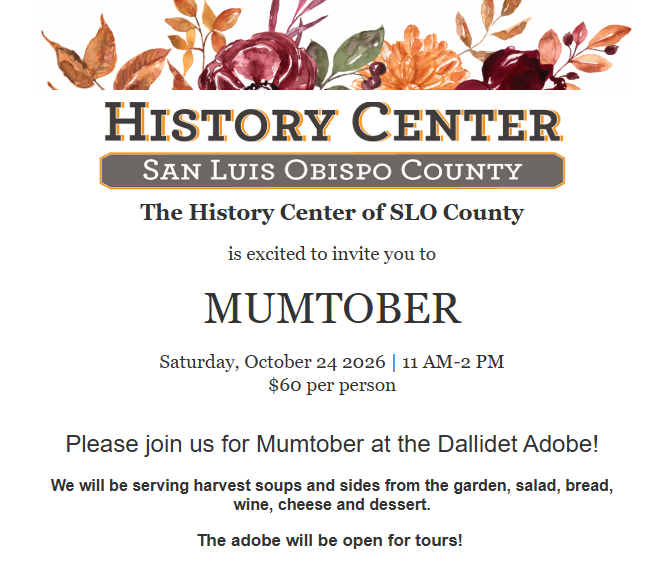
Tickets Available Here :
Current Exhibits
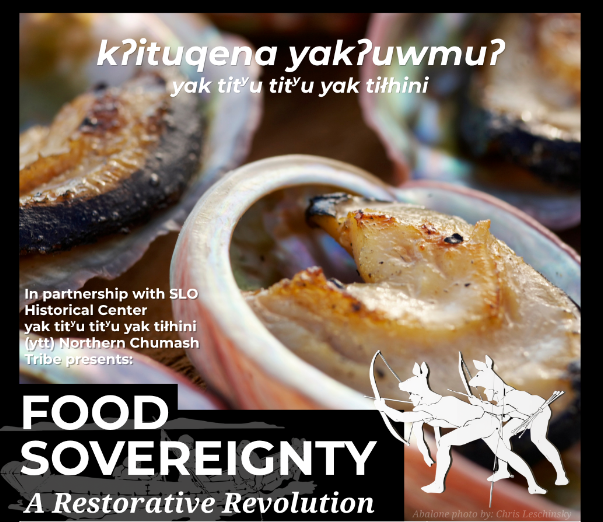
Food Sovereignty - A Restorative Revolution
Discover "food sovereignty" as it is lived by ytt / The Northern Chumash peoples: the responsibility to use everything and waste no life, and the reciprocity of caring for the life that gives one life. Stretching through time, this exhibit gathers the practices, the language, and the belonging that carry the ytt forward.
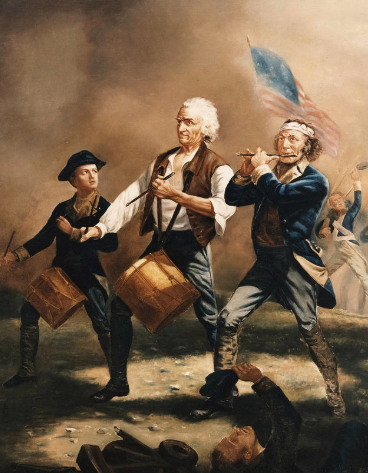
The Spirit of '76
"The Spirit of '76" is a look at Patriotism and Americana throughout San Luis Obispo County History in celebration of the Quarter Millennial Anniversary of The United States of America.
Happy 250th America!
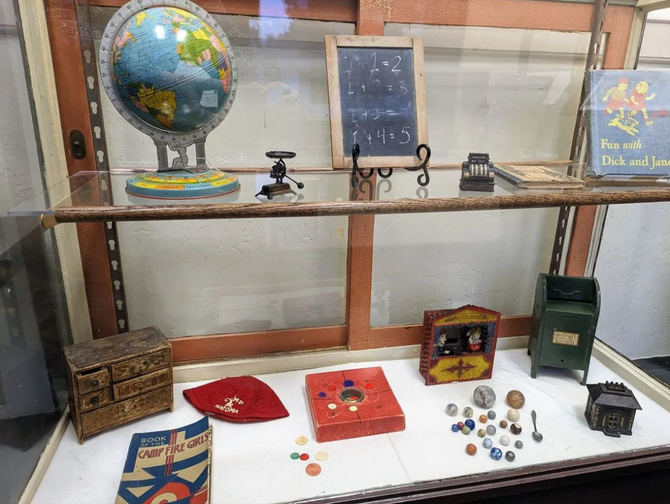
Chores and Play
Experience our hands-on exhibit about children's lives in the past, and quiz your knowledge on historic items. Our exhibit includes "virtual reality" via a stenograph, a working 1897 Singer sewing machine, old books like "Fun with Dick & Jane", and toys.
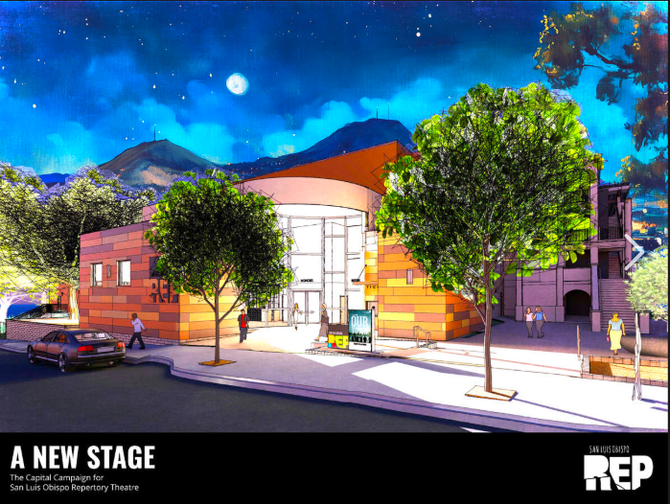
San Luis Obispo Repertory Theater -
A New Stage
As San Luis Obispo anticipates the completion of its
"Cultural Arts Corridor", a project more than 30 years in the making, with the completion of a new SLO Rep Theater, take a look at the upcoming plans, performances past, and this season's magnificent offerings.
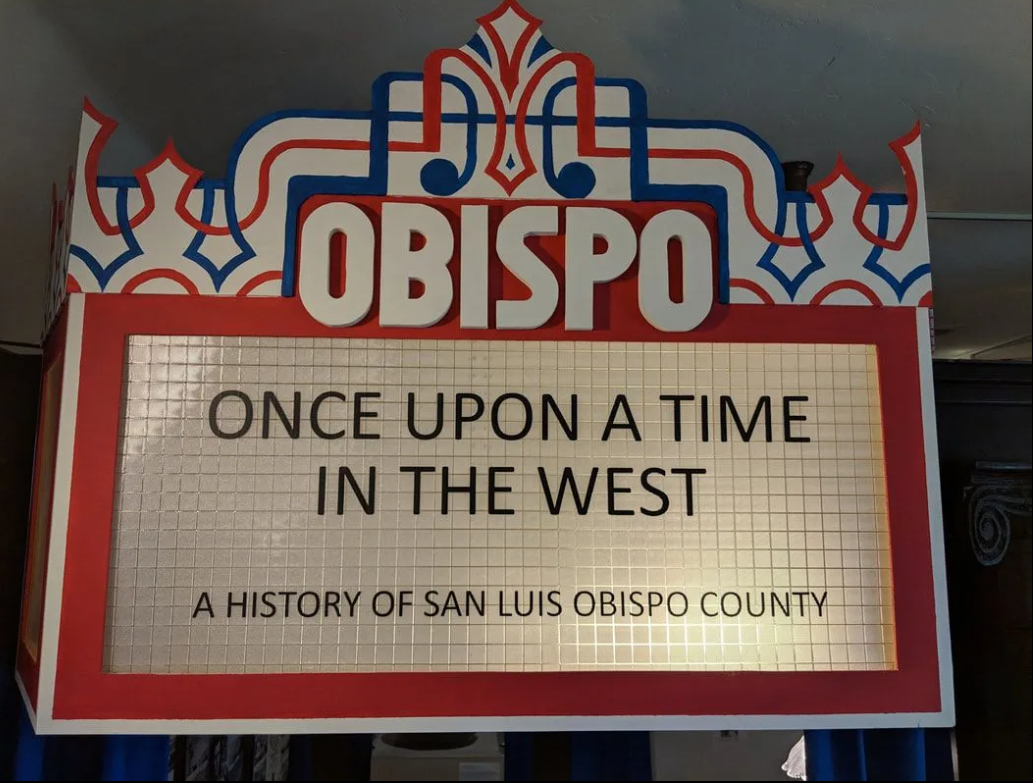
Once Upon a Time in the West
Explore the history of San Luis Obispo County, including a 15 minute film and various artifacts.
Our video is a curated video on the history of San Luis Obispo County, starting with the Chumash settlements from 15,000 years ago.
Sit back and relax as you learn all about our lovely SLO County.
Explore San Luis Obispo's
Rich History
The History Center of San Luis Obispo County is a California Public Benefit 501(c)3 non-profit corporation, renamed from the San Luis Obispo County Historical Society, chartered by the State of California on June 12, 1953. Its public sites include a gallery, research room, and book store in San Luis Obispo’s historic Carnegie Library building and the Dallidet Adobe and Gardens. The majority of the collections are housed in two off-site storage facilities.
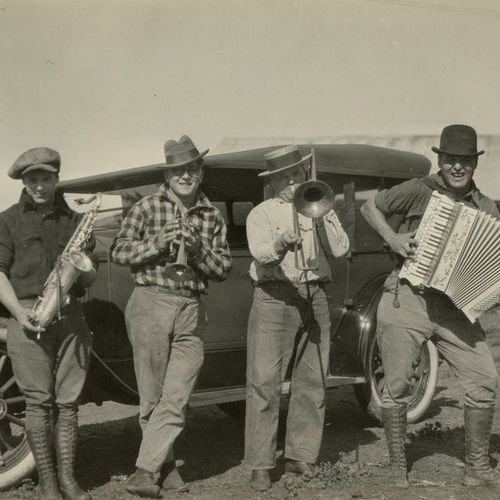
Dallidet Adobe & Gardens
Weddings, receptions, and other special events held on the historic property of the Dallidet Adobe and Gardens are truly unique.
Upcoming Events
October 22nd at 7:30 PM = The History Center will be sponsoring the Cal Poly Arts Forbes Organ Series as "The General", the classic silent film comedy starring Buster Keaton, celebrates its 100th Anniversary while the Performing Arts Center's Organ accompanies the madness.
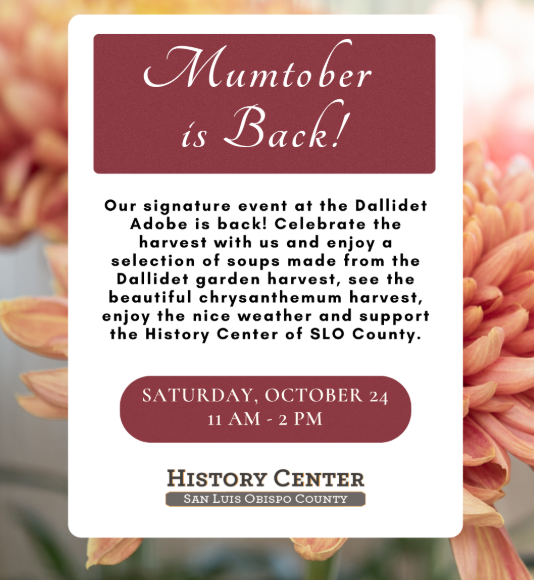
October 24th = Mumtober - a Celebration of Soups made from the Dallidet Gardens and Chrysanthemums!